
Alloy Steel Flanges: Strength for High Pressure & High Temperature Systems
Alloy steel flanges are built for strength and steady performance when things get rough. High temperature, high pressure, corrosive fluids. If you work in those conditions, you already know a weak flange can shut a whole line down. Alloy steel helps avoid that. It gives you a mix of durability and some flexibility in design and service conditions.
This article looks at what alloy steel flanges are, how they are made, and where they are used in real industrial systems.
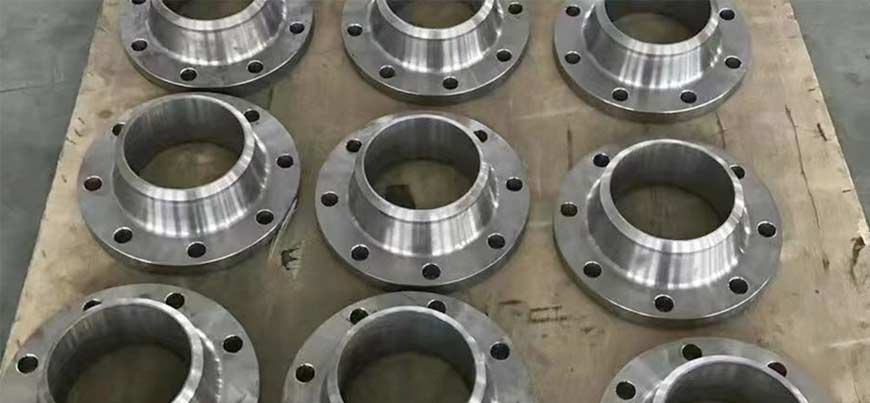
What Alloy Steel Flanges Are
Alloy steel flanges are pipe fittings made from carbon steel that has extra elements added to it. Typical additions include chromium, molybdenum, nickel, and sometimes vanadium.
These alloying elements change how the metal behaves. They raise the metal’s resistance to heat, improve corrosion resistance compared with plain carbon steel, and help the flange keep its strength under high pressure.
Because of that, alloy steel flanges are common in:
- Oil And Gas Pipelines
- Power Plants And Boilers
- Chemical And Petrochemical Plants
- Refineries
- Other Heavy Industrial Systems That Run Hot And Under Pressure
why choose alloy steel flanges
You pick alloy steel when plain carbon steel is not enough.
Alloy steel flanges hold their strength when exposed to high temperature, aggressive media, or heavy internal pressure. They resist deformation, crack growth, and general wear better than many standard carbon steel grades. That means longer service life and fewer shutdowns for replacement.
For boilers, steam lines, oil and gas lines, chemical units, and power plant systems, alloy steel flanges are usually a reliable, low risk choice.
Chemical composition of common alloy steel flange grades
Exact composition depends on the grade, but here is a typical range for popular ASTM A182 flange grades.
Material Composition
Grade A182 F5
- Chromium: 4 to 6 percent
- Molybdenum: 0.4 to 0.6 percent
- Carbon: up to 0.15 percent
- Silicon: up to 1 percent
- Manganese: up to 0.65 percent
Grade A182 F9
- Chromium: 8 to 10 percent
- Molybdenum: 0.9 to 1.1 percent
- Carbon: up to 0.15 percent
- Silicon: up to 1 percent
- Manganese: up to 0.60 percent
Grade A182 F11
- Chromium: 1 to 1.5 percent
- Molybdenum: 0.44 to 0.65 percent
- Carbon: up to 0.10 percent
- Manganese: up to 1 percent
Grade A182 F22
- Chromium: 2 to 2.5 percent
- Molybdenum: 0.87 to 1.13 percent
- Carbon: up to 0.10 percent
- Silicon: up to 1 percent
Grade A182 F91
- Chromium: 8.5 to 9.5 percent
- Molybdenum: up to 1 percent
- Nickel: 0.3 to 0.6 percent
- Vanadium: 0.18 to 0.25 percent
- Carbon: up to 0.12 percent
Each of these grades is designed for a different mix of temperature, pressure, and service environment. For example, F22 and F91 often show up in high temperature steam lines in power plants, while lower alloy grades may be used in less extreme conditions.
Mechanical Properties
- Tensile strength: 415 to 585 MPa
- Yield strength: 205 to 275 MPa
- Hardness: 140 to 200 HB
- Resistance to creep at high temperature
- Strength retention at elevated temperature
These values help the flanges keep their shape and seal under internal pressure and thermal stress in tough industrial service.
Key Specifications Buyers Should Check
- Standard: ASTM A182 / ASME SA182
- Type: weld neck, blind, socket weld, slip on, threaded, or lap joint
- Pressure class: 150, 300, 600, 900, 1500, 2500
- Facing: RF (raised face), RTJ (ring type joint), or FF (flat face)
- Size range: typically from ½ inch up to 48 inch
- Wall thickness or schedule of the connected pipe
- Heat treatment condition (e.g., normalized and tempered, quenched and tempered)
- Material test certificate (MTC) from the mill or supplier
Where Alloy Steel Flanges Are Used
You will usually find alloy steel flanges in systems where both pressure and temperature push the limits.
- Refineries
- Petrochemical complexes
- Thermal and combined cycle power plants
- Fertilizer plants
- Boilers and heat exchangers
- Oil and gas transport lines
- Superheated and high pressure steam lines
These are places where failure has high cost in repairs, lost production, and safety risk, so more capable materials are preferred.
Main Advantages of Alloy Steel Flanges
- High strength: They stay stable under heavy load and internal pressure.
- Heat resistance: They keep their shape and strength at elevated temperatures.
- Corrosion resistance: They handle chemicals, steam, and process media better than many carbon steel grades.
- Long service life: Slower wear and degradation can reduce unplanned downtime and replacement frequency.
- Choice of grades: Different compositions let you pick a material tailored to your temperature range, pressure rating, and process fluid.
Used correctly, alloy steel flanges give you a sturdy connection point in systems that run hot, hard, and for long hours.